
The End of Business-as-Usual IT Support
For decades, IT Infrastructure and Operations (I&O) has relied on a familiar model: scale the team as demand increases. Meaning, with more users, systems, and tickets, your company will require more people. That model is reaching its limits.
Ticket volumes continue to rise, environments are more complex, and expectations for uptime and speed are higher than ever. Yet increasing headcount no longer delivers proportional value. It introduces cost, coordination challenges, and diminishing returns.
At the same time, artificial intelligence is redefining how IT work gets done. AI is no longer just a tool supporting IT teams. It is becoming the workforce that IT teams manage.
This shift is accelerating the emergence of the AI Operations Center (AIOC), a centralized, intelligence-driven model that is rapidly becoming the future of IT operations. By 2028, leading organizations will operate with AI handling the majority of routine execution, while human teams focus on oversight, optimization, and strategic decision-making.
What Disappears as AI Automates Core IT Tasks
The first phase of transformation is elimination. AI agents are rapidly taking over routine, repeatable work that has historically defined Level 1 support.
This includes:
- Identity and access management requests
- Basic service desk inquiries
- Routine server provisioning and patching
- NOC alert triage and manual escalation
- Compliance reporting and standard audits
These activities follow predictable patterns, making them ideal candidates for automation and AI through IT infrastructure and operations automation
The impact is significant. In a typical enterprise model, Infrastructure and Operations teams always have a backlog of requests and projects to work on, and AI can significantly increase the IT team’s capacity to do his work.
The Four Pillars of the AI Operations Center
At the center of this transformation is the AI Operations Center (AIOC), a new operating model built on three distinct AI paradigms that together contribute to a more intelligent and autonomous IT environment.
Conversational AI Driving Service Interaction
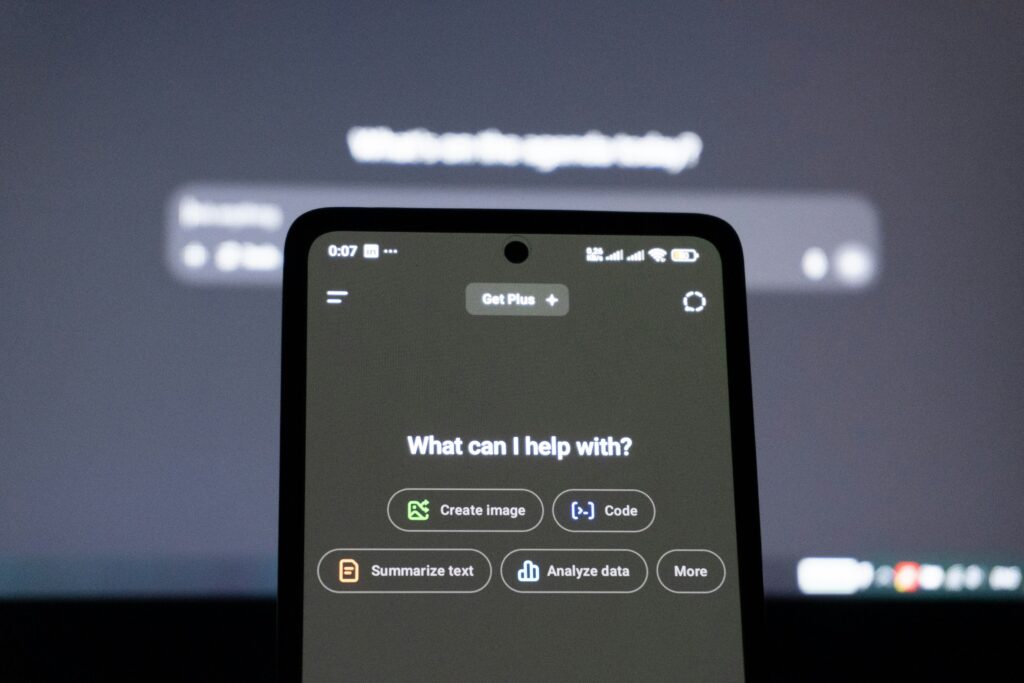
Conversational AI, powered by large language models, becomes the primary interface for IT services. Employees interact with AI-driven systems that can understand intent, resolve issues, and trigger workflows in real time.
This dramatically improves the user experience while reducing reliance on human service desk agents.

Predictive AI Enabling Proactive IT Maintenance
Predictive AI engines continuously analyze logs, metrics, and system behavior to identify anomalies and anticipate failures. This capability is foundational to predictive IT maintenance, resolving incidents before they occur and significantly reducing the impact of events before they become an incident.
The result is a sharp reduction in P1 and P2 incidents, improved system availability, and less operational noise.
Agentic AI Executing Complex IT Workflows
Agentic AI represents the next level of automation. These systems can provision infrastructure, configure environments, apply patches, and optimize workloads without manual intervention.


The Critical Role of Human-in-the-Loop Oversight
Despite the rise of automation, human expertise remains essential. The AIOC relies on a Human-in-the-Loop (HITL) model, in which skilled professionals oversee AI decisions, validate outcomes, and intervene when ambiguity or risk arises.
This ensures that governance, compliance, and accountability remain intact as automation expands.
Unlocking Strategic Value Beyond Cost Reduction
Improving throughput and the capacity to deliver IT work is one of the most visible outcomes of AIOC adoption.
Improved Infrastructure Reliability
Predictive capabilities reduce downtime and increase system resilience. Instead of reacting to failures, IT teams operate in a state of continuous optimization.
Greater Operational Capacity
Automation allows IT to handle more demand without increasing headcount. This creates a scalable foundation for growth, especially in complex, multi-cloud environments.
Together, these outcomes shift IT from a cost center to a service driver—one that actively contributes to business performance.
Navigating Workforce Transformation and Partner Strategy
The transition to an AI-enabled operating model requires a fundamental shift in how IT talent is structured and developed.
Evolving Roles and Skills
Many existing roles will evolve:
- NOC analysts transition into AI operators
- Help desk agents move into conversational AI oversight roles
- Engineers develop expertise in AI tools, orchestration, and governance
At the same time, new roles emerge, including AI operations leadership, MLOps engineering, and AI platform management.
This transformation requires a deliberate reskilling strategy and clear communication with the workforce.
The Build vs Partner Decision
Software vendors are racing to embed AI into their platforms, and managed service providers are building their own versions of the AIOC. Both paths are real — but neither is turnkey. Fulfilling the AIOC vision requires an evaluation across four dimensions: the AI models, the data pipelines feeding them, the orchestration layer that coordinates them, and the governance framework that keeps them safe and accountable.
Partnering with experienced advisors and providers can significantly accelerate time to value, enabling production-ready capabilities in a matter of weeks or months.
Windsor Group’s Role as a Strategic Advisor
This is where Windsor Group plays a critical role.
As an independent advisor, Windsor Group helps CIOs define their AI Operations Center strategy, evaluate vendors, and structure outcome-based agreements that align with AIOC objectives.
Rather than promoting a single solution, Windsor ensures that organizations:
- Select the right operating model
- Align technology investments with business outcomes
- Establish governance and performance metrics
- Hold partners accountable to measurable results
This approach reduces risk and accelerates the path to a fully operational AIOC.

A 24-Month Window to Redefine IT Operations
The transition to an AI Operations Center is not a distant vision. It is a near-term reality.
Organizations that begin now can achieve a mature, AI-enabled operating model within 24 months, positioning themselves for sustained efficiency, scalability, and innovation by 2028.
Those who delay will face compressed timelines, higher costs, and increased competitive pressure.
The shift toward AI-driven IT operations is not optional for large-scale enterprises. It is a structural evolution driven by technology, economics, and business demand.
Start Defining Your AI Operations Strategy Today
The move toward an AIOC requires clarity, planning, and the right partners.
Windsor Group works with enterprise CIOs to assess current capabilities, define future-state operating models, and build a practical roadmap for AI-enabled IT operations.
If you are evaluating how to modernize your IT operations for 2028, now is the time to act. Schedule an AI Sourcing Strategy Briefing with Windsor Group to benchmark your organization and define the next steps toward a fully operational AI Operations Center.